Vintage 3-Speed Bluetooth Record Player: RCA, USB & AUX
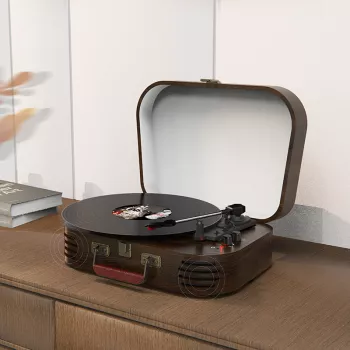
Vintage 3-Speed Record Player with Bluetooth, RCA, USB, AUX-in, and Built-in Speakers
A compact turntable that blends classic styling with modern connections makes it easy to spin vinyl, stream from a phone, and plug into other audio gear. A 3-speed design helps cover most record collections, while Bluetooth, RCA, USB, and AUX-in make day-to-day listening flexible in a small home setup. Below is what to expect from this style of player and how to get cleaner sound with simple care.
What makes this record player “vintage” (and why it’s practical)
“Vintage” here typically means a classic-inspired shape and finish—something that looks at home on a shelf, console, or bedside table rather than a bulky component rack. The practical side is the all-in-one layout: built-in speakers get music playing quickly without shopping for extra equipment or running speaker wire across a room.
What elevates the experience beyond nostalgia is the modern connection mix. Bluetooth supports everyday streaming, while AUX-in and RCA outputs let it fit into both casual and more traditional audio setups. USB features vary by model, but they’re often included for simple digital playback or transfer functions—useful when balancing vinyl with a more modern library.
3-speed playback: 33, 45, and 78 at a glance
Three speeds matter most for homes with a blend of new pressings, older finds, and hand-me-down records. Being able to switch speeds means fewer “almost right” plays that sound too slow or too fast.
33⅓ RPM
This is the standard speed for most full-length LP albums. If most of your collection is modern releases, this will be the default setting.
45 RPM
Common for singles and some EPs. Many 45s have a larger center hole, which may require an adapter depending on the record and spindle size.
78 RPM
Used for older shellac records and requires extra care. Many 78s sound best with a dedicated stylus, so it’s smart to confirm stylus compatibility before dropping the needle on a vintage disc.
| Speed | Usually found on | Notes for best results |
|---|---|---|
| 33⅓ RPM | LP albums | Clean records regularly; store vertically to prevent warping |
| 45 RPM | Singles / EPs | Check if an adapter is needed for large-center singles |
| 78 RPM | Vintage shellac records | Handle gently; confirm stylus compatibility before playing |
Bluetooth, RCA, USB, and AUX-in: how each connection fits a setup
Bluetooth
Bluetooth is the fastest way to make the player your “daily driver” speaker. Pair a phone, tablet, or laptop and play playlists, podcasts, or background music without cables. Pairing usually involves switching the unit to Bluetooth mode, selecting it in your device’s Bluetooth menu, and confirming the connection; exact steps can vary by player. For more detail on how Bluetooth devices communicate, the Bluetooth Core Specification is the official reference.
RCA output
RCA outputs are the bridge to bigger sound. Connect to powered speakers for an easy upgrade, or plug into a stereo receiver/amplifier if you already have one. This is the best path if you want stronger bass, clearer vocals, and wider stereo separation than small built-in speakers can typically provide.
AUX-in
AUX-in is the reliable wired fallback when Bluetooth isn’t ideal—handy for older MP3 players, desktop computers, or situations where you want a stable connection without pairing. It’s also useful in busy apartments where wireless interference can happen.
USB
USB features depend on the specific unit: some models support digital playback from a USB drive, while others offer transfer/recording functions. Before planning a digitizing project, confirm the supported formats and how the USB mode behaves in the product details.
Built-in speakers vs. external speakers: what to expect
Built-in speakers are designed for convenience: quick setup, small rooms, and casual listening at a desk or kitchen counter. They’re also helpful for testing thrift-store finds or playing a record while you cook without turning the living room into a full listening session.
For sound quality, external speakers connected via RCA typically deliver the biggest improvement per dollar. You’ll usually hear tighter bass, cleaner midrange detail, and better left-right separation—especially noticeable on live recordings and densely layered mixes. In apartments or shared spaces, modest powered speakers can add clarity at lower volumes, so the music feels fuller without getting louder.
Everyday setup and care for better sound and longer record life
Small changes in placement and routine can reduce noise and keep your collection in good shape.
For deeper best practices on handling and storage, the Library of Congress guide to caring for recordings is a trusted resource, and the RIAA vinyl care overview adds practical, consumer-friendly tips.
Who this style of turntable is best for
Product snapshot
- Vintage 3-Speed Record Player with Bluetooth, RCA, USB, AUX-in, and Built-in Speakers — $53.51 (In stock)
- Artificial Fiddle Leaf Fig Tree — $52.97 (In stock)
FAQ
Can Bluetooth be used to play music through the built-in speakers?
In most designs, yes: your phone or tablet pairs to the player and streams audio that plays through the built-in speakers. Pairing usually means selecting Bluetooth mode on the unit and choosing it in your device’s Bluetooth list, though the exact behavior depends on how the player implements Bluetooth.
Do 78 RPM records work the same as 33 and 45?
Not always. Many 78 RPM records are shellac and can require a dedicated stylus for best results, so it’s important to check stylus compatibility and handle 78s gently to avoid damage.
Is RCA better than using the built-in speakers?
RCA isn’t inherently “better,” but it usually enables better sound by connecting to powered speakers or a receiver. Built-in speakers win for convenience, while RCA output typically improves clarity, bass response, and stereo separation with a simple upgrade.






Leave a comment