Cat Body Language Cheat Sheet: Signals, Tails, Ears & Meows
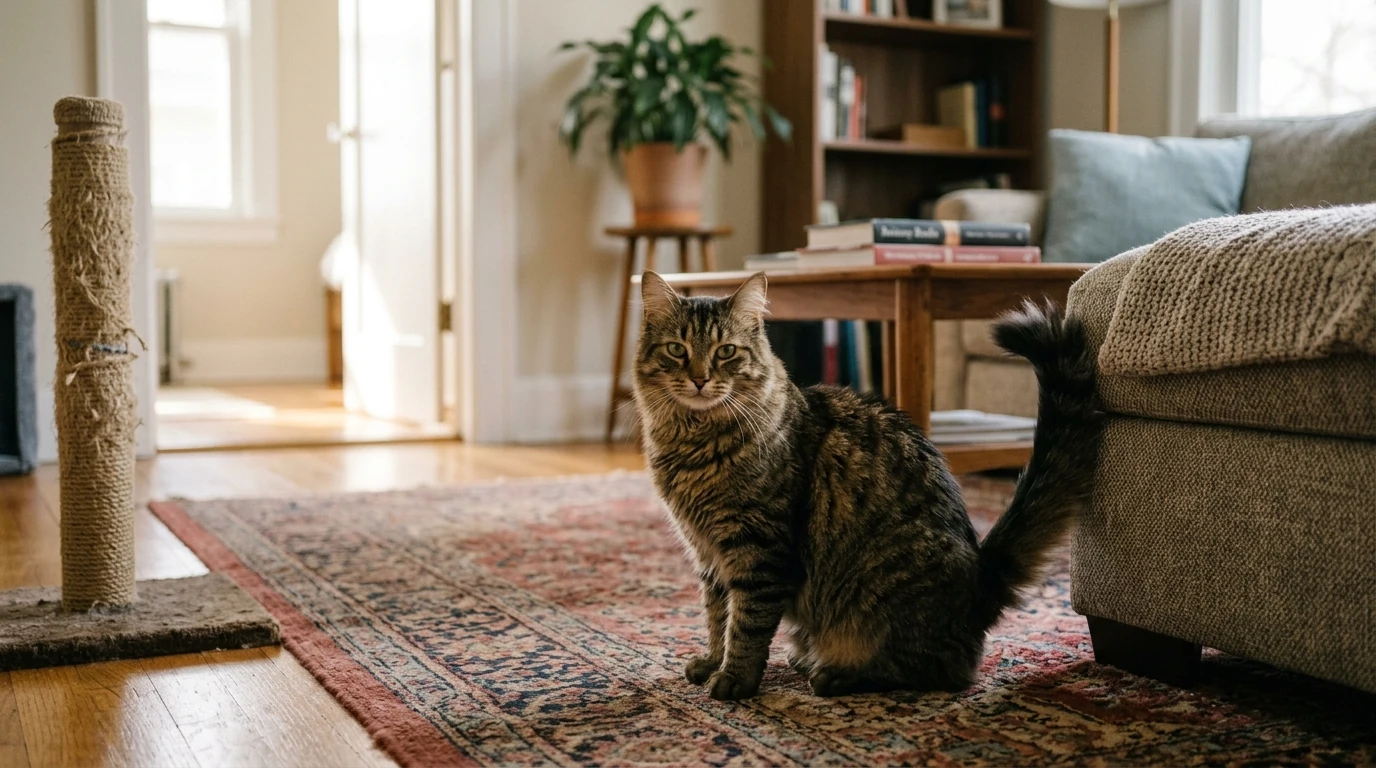
Cat Body Language & Behavior Cheat Sheet: A Printable Guide to Feline Signals, Postures, and Meows
Cats communicate constantly—often without a single sound. Learning to read tail position, ear angle, eyes, posture, and vocal cues helps prevent bites and scratches, lowers stress, and strengthens trust. This guide breaks down the most common feline signals into clear categories and practical “what to do next” steps, with a printable cheat sheet you can keep on the fridge or near the litter box.
How cats communicate: the full “signal stack”
Think of feline communication as layers that stack together. One sign rarely tells the whole story; clusters of signals do.
- Body language comes first: posture, tail, ears, eyes, whiskers, and movement patterns carry most of the message.
- Vocalizations add context: meows, trills, chirps, growls, and yowls often change meaning depending on what the body is doing.
- Scent and touch matter: rubbing, bunting, scratching, and kneading are communication—often about comfort, territory, or affiliation.
- Look for clusters, not single signs: a twitching tail can mean excitement or irritation; pair it with ears, eyes, and distance-seeking behavior.
Quick read: common signals and what they usually mean
| Signal | What it often means | Helpful response |
|---|---|---|
| Slow blink, soft eyes | Relaxed, friendly, trust | Slow blink back; speak softly; offer a gentle hand for a sniff |
| Ears forward, tail up with a hook | Greeting, social interest | Let the cat approach; offer a short pet on cheeks/shoulders if invited |
| Tail lashing or thumping | Overstimulated, conflicted, annoyed | Pause petting; give space; reduce noise or handling |
| Ears flattened, crouched body, wide pupils | Fear/defensiveness | Stop approaching; create an escape route; avoid eye contact |
| Arched back, fur puffed, sideways stance | High arousal—fear or aggression | Increase distance; separate pets; do not pick up |
| Belly exposed | Can be relaxed OR a defensive trap | Watch the rest of the body; pet cheeks/chest instead of belly unless clearly enjoying it |
| Purring | Often content, sometimes self-soothing or pain | Confirm with posture and appetite; if paired with hiding/lethargy, consider a vet check |
Ears, eyes, and whiskers: the fastest mood indicators
- Ears: forward usually indicates interest; sideways “airplane ears” often signal uncertainty; pinned back suggests fear or defensive aggression.
- Eyes: soft lids and normal pupils are calm; dilated pupils can indicate fear, excitement, or pain—use context like environment and movement.
- Staring: direct, fixed staring can escalate tension between cats; slow blinking and looking slightly away can de-escalate.
- Whiskers: neutral whiskers sit relaxed; whiskers pushed forward can indicate hunting focus or arousal; whiskers pulled back may signal stress.
If you’re unsure, choose the safest next step: lower your voice, reduce motion, and let the cat control the distance. Many conflicts end when a cat is given a clean exit route.
Tail and posture: reading comfort vs. conflict
- Tail up: generally confident and open to interaction; a slight hook at the tip often appears during friendly greetings.
- Tail tucked: insecurity or fear; consider whether the cat has an escape route and whether the space feels safe.
- Twitching tip: heightened focus or mild agitation—often seen during play, stalking, or before a swat if overstimulated.
- Whole-body posture: a loose, rolling walk suggests comfort; a low, creeping body suggests fear; a stiff, forward-leaning stance can signal a challenge.
- Distance is communication: moving away, hiding, or turning sideways is often a polite “no thanks” before stronger warnings appear.
Meows and other sounds: what they can mean in everyday situations
- Meow: commonly directed at humans; meaning depends on tone, repetition, and situation (greeting, food request, attention, discomfort).
- Trill/chirp: often friendly and inviting; frequently used by cats to greet or to encourage following.
- Chatter: excited frustration during watching prey (birds, squirrels) or toy movement.
- Growl/hiss/spit: clear boundary signals; respond by increasing distance and reducing triggers.
- Yowl: can indicate distress, territorial disputes, mating behavior (intact cats), or pain—especially if sudden and unusual.
Common moments decoded: play, petting, and “sudden bites”
Using a printable cheat sheet at home
Printable Cat Body Language & Behavior Cheat Sheet
If you want a fast reference you can use daily, the Printable Cat Body Language & Behavior Cheat Sheet groups signals by ears, eyes, whiskers, tail, posture, and vocalizations so you can interpret what you’re seeing in seconds. It’s designed for easy printing and posting—especially helpful for new cat adopters, families with kids, multi-cat homes, and pet sitters.
It’s also handy to keep a copy near the carrier to make vet-day handling calmer and more predictable. For chilly trips (or cats who love cozy layers), pair calm handling with something comfortable like the Cozy Fleece Hooded Pet Jacket for Small Dogs & Cats.
When to get professional help
For additional cat-friendly guidance, visit American Association of Feline Practitioners (AAFP) Cat Friendly resources, the Cornell Feline Health Center, or the ASPCA cat behavior hub.
FAQ
Does a cat showing its belly always mean it wants belly rubs?
No. A belly display can signal comfort and trust, but it can also be a defensive position that invites a grab-and-kick response. Check for loose muscles, soft eyes, and a relaxed tail, and choose safer petting zones like cheeks and shoulders unless the cat clearly asks for more.
Why does my cat purr when it seems stressed or hurt?
Purring often means contentment, but it can also be self-soothing when a cat is anxious or in pain. Look at the full picture—hiding, reduced appetite, unusual posture, or sudden behavior changes are reasons to contact a veterinarian.
How can kids tell when to stop petting a cat?
Teach kids to stop at the first “no thanks” clues: tail thumping, ears turning back, skin twitching, a tense body, or the cat moving away. A simple rule is “three gentle pets, then pause,” and only continue if the cat re-initiates contact.












Leave a comment