Wooden Montessori Push Walker: Safe, Steady First Steps
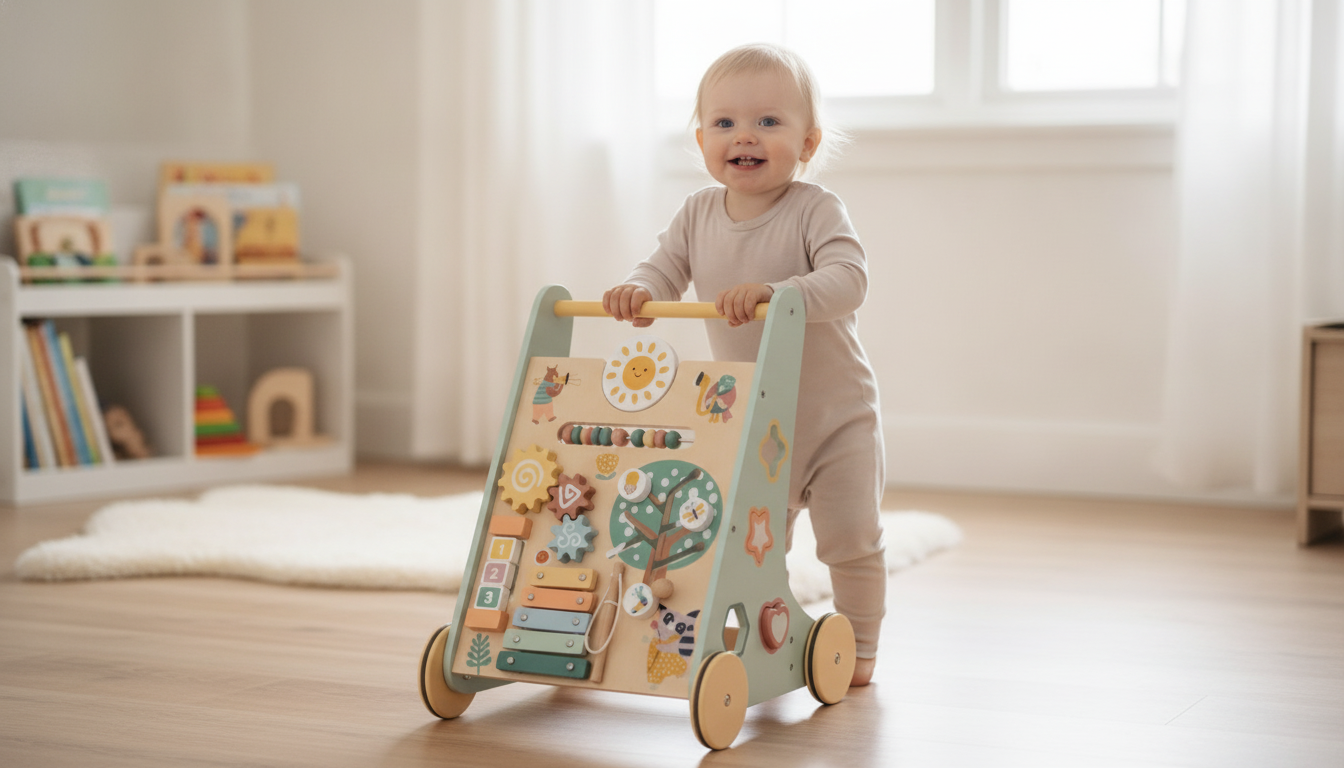
Wooden Montessori Baby Walker with Wheels: Steady Steps and Purposeful Play
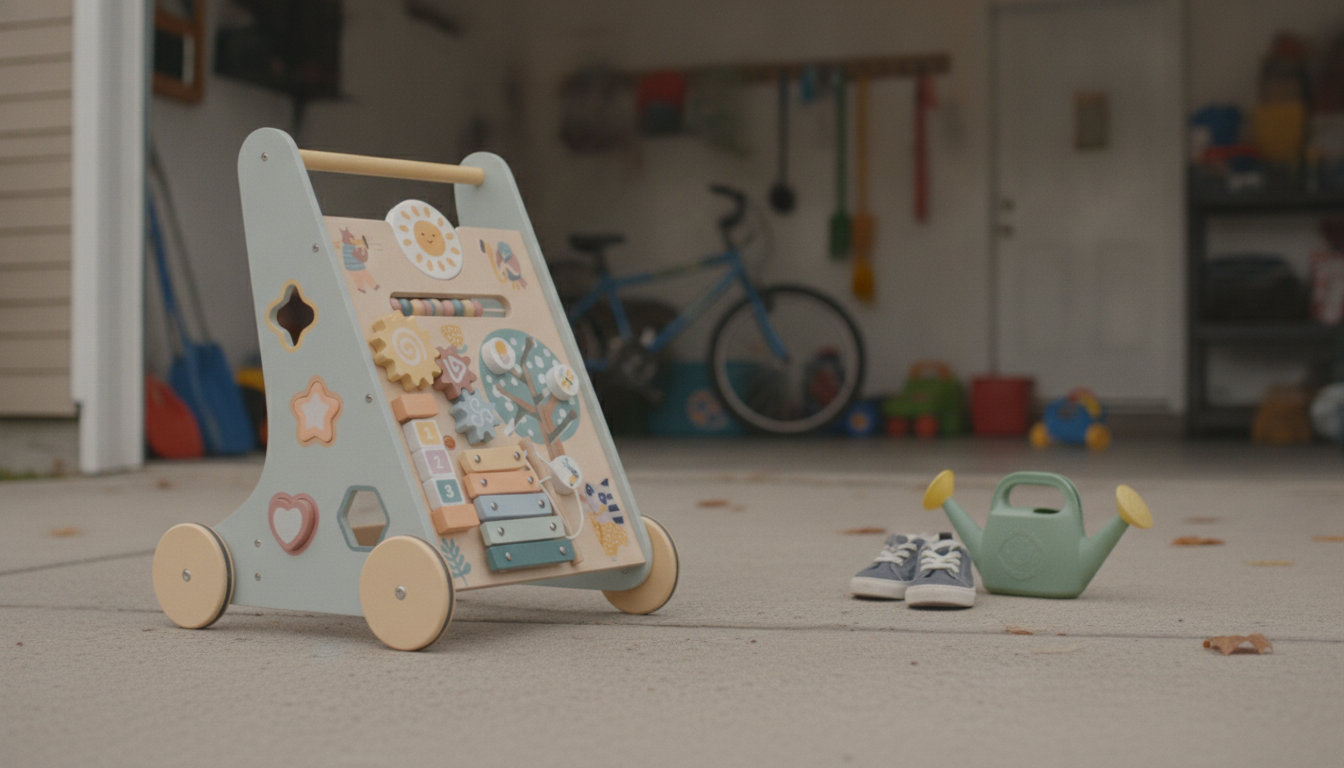
A wooden Montessori-style baby walker with wheels can support early mobility while keeping play simple, hands-on, and developmentally focused. The goal isn’t speed—it’s stability, control, and confidence. When the design is sturdy and the setup is thoughtful, a push walker becomes a practical tool for practicing balance, coordination, and early walking skills in a calm, uncluttered way.
What This Walker Is Designed to Do
A push walker (the kind baby pushes from behind) is built to give little hands a reliable surface while the body learns how to stand tall and move forward. Used appropriately, it can fit naturally into everyday movement practice.
- Provides a stable push surface for babies practicing standing and cruising
- Encourages gross-motor development through controlled, self-paced movement
- Combines movement and simple play in a single, uncluttered toy
- Works best on flat, open floors with close adult supervision
Montessori-Friendly Benefits
Montessori-aligned materials tend to be simple, durable, and focused on “real” skill-building. A wooden walker fits that philosophy when it supports the child’s own effort rather than distracting with noise, lights, or fast rolling.
- Promotes independence by letting a child initiate movement and stop when ready
- Supports coordination by pairing hand placement (grip) with leg drive (push)
- Invites repetition—one of the most effective ways babies refine new skills
- Often pairs well with open-ended blocks or simple shape activities rather than lights/sounds
For a quick overview of typical early movement progression, the CDC’s milestones can be a helpful reference for what’s common at different stages of development (every child is different): CDC: Important Milestones.
Safety First: When and How to Use It
Not every baby is ready for a push walker at the same time, and readiness matters more than a specific age. The safest use happens when the child can already pull to stand and bear weight steadily with support, and when the environment is prepared for slow, controlled practice.
- Use only when a baby can pull to stand and bear weight steadily with support
- Choose a clear, level space; avoid stairs, thresholds, and steep rugs
- Keep sessions short and supervised; stop if the walker starts to tip or roll too fast
- Check wheel resistance (if adjustable) and confirm the walker doesn’t slide away when lightly pushed
It’s also important to distinguish push walkers from sit-in baby walkers. Safety concerns and injury risks are different. For background from pediatric and consumer safety authorities, see the American Academy of Pediatrics guidance on baby walkers and the CPSC baby walker safety information.
Key Features to Look For in a Wooden Walker with Wheels
Because babies can lean, twist, and push unpredictably, the best design is stable, smooth to the touch, and controllable on your home’s flooring.
- Wide base and low center of gravity for stability
- Smooth, rounded edges and splinter-free finish
- Non-toxic materials and coatings suitable for baby use
- Wheels that roll smoothly but not too freely; rubber rings or traction-friendly wheels help on hard floors
- Comfortable push bar height for an upright posture (not hunching or reaching too high)
- Solid joinery and durable hardware that stays tight with repeated use
Quick Checklist for a Good Fit at Home
| What to check | Why it matters | What to look for |
|---|---|---|
| Stability | Reduces tipping during turns and stops | Wide stance, sturdy frame, balanced weight |
| Wheel behavior | Controls speed and prevents slipping | Smooth roll with traction; not overly fast |
| Handle height | Encourages better posture and safer pushing | Baby can push without leaning heavily forward |
| Finish & edges | Prevents scratches and mouth-contact concerns | Rounded corners, smooth wood, non-toxic finish |
| Floor compatibility | Improves control and confidence | Works on your flooring without skidding |
Getting Started: Setup and First Sessions
The first few sessions should feel slow and supported. A little setup goes a long way toward preventing “runaway walker” moments and helping baby learn what steady pushing feels like.
- Place the walker on a grippy surface (foam mat or low-pile rug) for early attempts
- Stand the walker against a wall to practice pulling up before rolling begins
- Offer hands-on support at the hips or torso rather than pulling the arms
- Encourage slow steps by placing a favorite safe object a short distance away
- If the baby leans hard on the handle, pause and reset—aim for gentle, upright pushing
Simple Activities That Pair Well With a Montessori Walker
Purposeful movement is often more engaging than “push it fast.” These activities keep the focus on control, repetition, and simple problem-solving.
- “Park and play”: stop the walker at a shelf and choose one toy to carry back
- Block delivery: carry one block at a time to a basket to practice purposeful movement
- Navigation practice: set up wide “lanes” with pillows to guide gentle turns
- Stop-and-go game: practice stopping at a line of tape to build control
- Mirror walks: let baby push toward a mirror to encourage posture and balance checks
Care, Cleaning, and Longevity
Recommended Picks (In Stock)
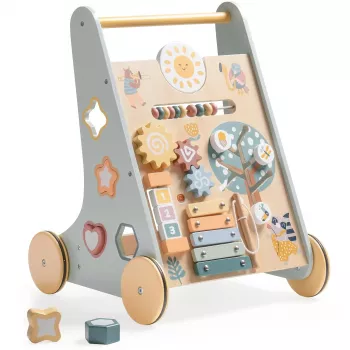
Wooden Montessori Baby Walker with Wheels
Artificial Fiddle Leaf Fig Tree
FAQ
At what age can a baby use a push walker with wheels?
Focus on readiness rather than age: a baby should be able to pull to stand and bear weight steadily with support. Start on flat floors with close supervision, and pause use if the walker rolls too quickly or encourages heavy leaning.
Are baby walkers with wheels safe?
Push walkers (where baby pushes the toy) are different from sit-in walkers. Safety depends on a stable build, controlled wheel speed, and using the walker away from stairs and hazards with consistent supervision.
How can wheel speed be controlled on hard floors?
Choose traction-friendly wheels (often with rubber) or adjustable resistance if available. A foam mat or low-pile rug can slow early attempts, and an open, uncluttered area reduces sudden turns and bumps.






Leave a comment