Wooden Push Walkers: Do They Help Babies Walk?
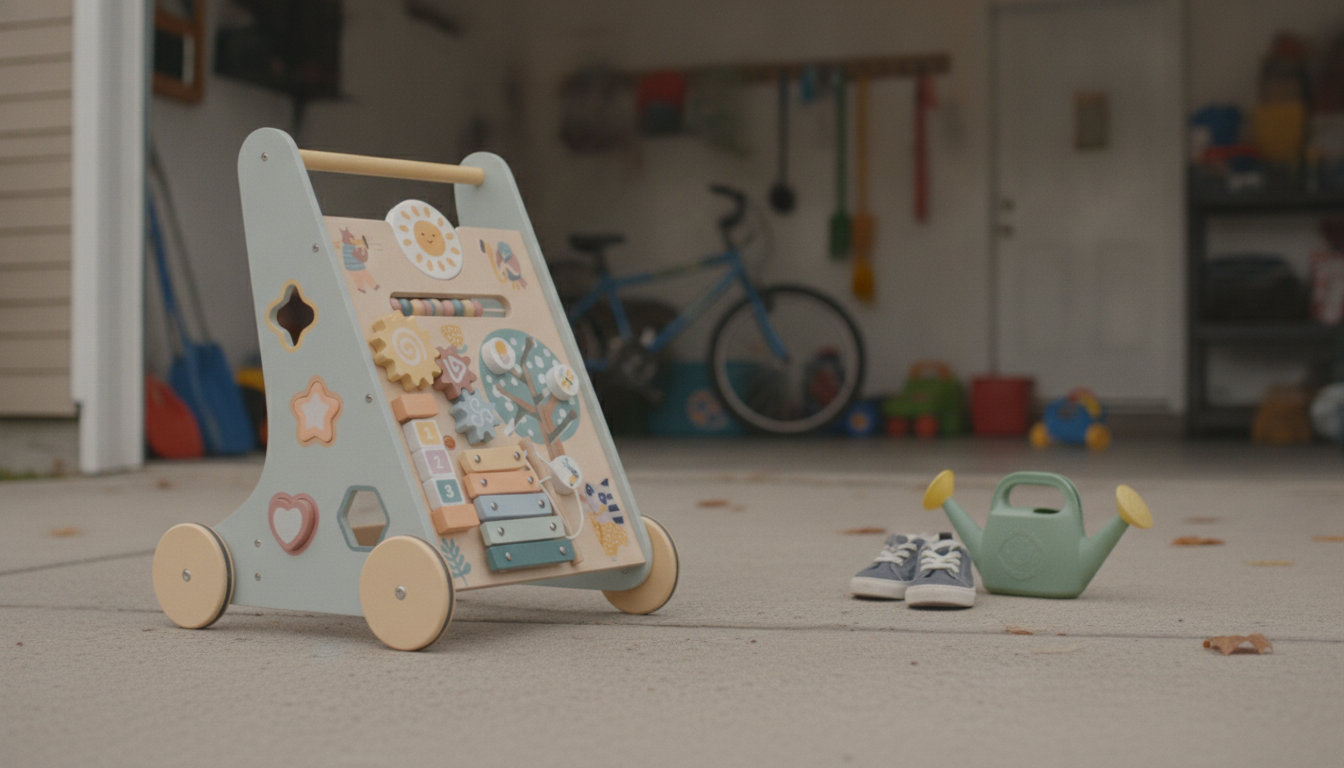
Do wooden walkers help babies walk?
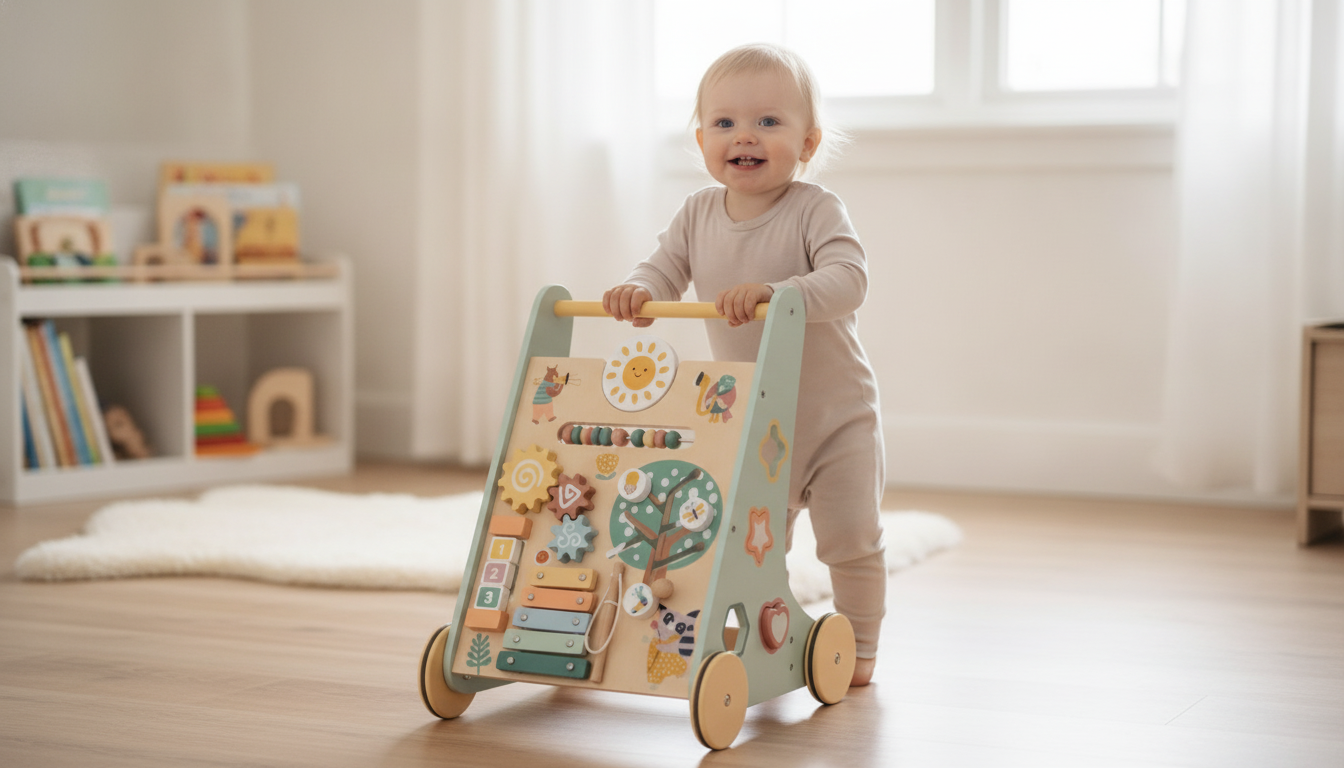
Wooden walkers can support early standing and cruising, but they don’t “teach” a baby to walk faster. Most babies learn to walk through a mix of strength, balance, and confidence that develops naturally with floor time. A sturdy wooden push walker can be a fun tool for practice, especially for babies who are already pulling up and taking steps while holding onto furniture.
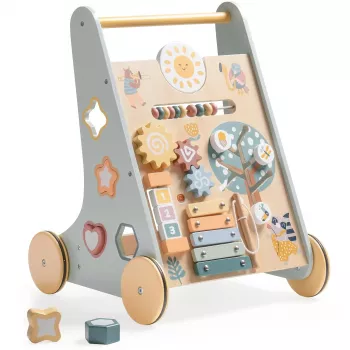
The biggest benefit of a wooden push walker is that it gives a stable handle to hold while a baby practices shifting weight, coordinating steps, and moving forward. Many wooden models are heavier than plastic, which can reduce tipping and make them feel more predictable. Some also include adjustable resistance so the wheels don’t roll too quickly, helping prevent “runaway walker” moments.
When a wooden walker can be helpful
A wooden push walker tends to be most useful when a baby is already showing readiness signs: pulling to stand, standing with support, cruising along a couch, and enjoying upright play. At that stage, a walker can encourage more practice steps across open space, which can build confidence.
When it may not help (or may frustrate)
If a baby isn’t yet standing steadily, a walker can become something they lean on rather than a tool that builds controlled balance. Also, if the wheels roll too freely, babies may fall forward or lose their footing. Choosing a wide-base design, checking wheel resistance, and using it only on flat, non-slippery surfaces can make a big difference.
Safer ways to encourage walking
Plenty of supervised floor time, barefoot practice on safe surfaces, and simple cruising routes (like along a sofa) often do more than any product. If you’re comparing options and want a deeper breakdown of benefits, drawbacks, and what to look for, see the full guide here: Do wooden walkers help babies walk?
FAQ
What age is best for a push walker?
Many babies are ready once they can pull to stand and cruise confidently, often around 9–12 months. Readiness matters more than age, so look for steady standing and good trunk control.







Leave a comment